
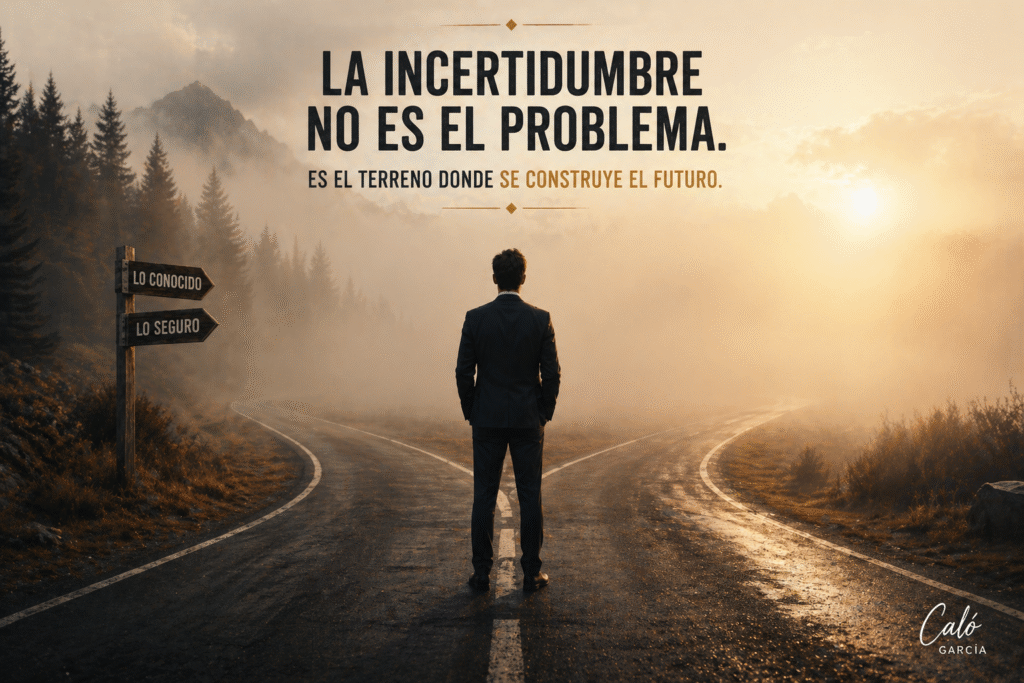
When everything becomes uncertain, many companies point out.
Market, politics, inflation, war, technology.
But the truth is less epic and more brutal: uncertainty does not create problems, it makes them visible.
The companies that collapse do not do so because the environment changed, but because they were designed for a single scenario.
They were so optimized that they were left with no room.
They centralized so much that they ran out of speed.
They repeated so much what worked, they stopped reading reality.
For years we have confused efficiency with strength, profitability with resilience, control with leadership and when the storm comes, it is too late to build foundations.
The organizations that resist are not the ones that guessed the future, they are the ones that didn't bet everything on one.
Those who accepted the least return in exchange for optionality.
Those who invested in "non-urgent" capabilities... until they became critical.
At those times, the leader does not fail to decide wrong, he fails to decide from fear disguised as certainty, to act quickly to reassure, rather than to think deep to sustain.
Because in uncertainty it is not a question of deciding faster, but of deciding with less ego, with better questions, clearly what is structural and what is noise.
That day I understood something simple and brutal.
The crisis does not force you to change your strategy... it forces you to live with the decisions you made when everything was going well.